In today’s data-driven world, digital marketing is no longer just about creativity and intuition. It is about precision, measurement, and continuous optimization. Businesses that succeed online are those that understand how to track performance, interpret data, and turn insights into actionable strategies. This is where digital marketing analytics becomes essential.
Digital marketing analytics refers to the process of collecting, measuring, analyzing, and interpreting data from various online marketing channels. It helps marketers understand what works, what doesn’t, and how to improve campaign performance effectively. Without proper analytics, even the most creative campaigns can fail to deliver meaningful results.
This comprehensive guide will walk you through everything you need to know about digital marketing analytics, including key metrics, tools, strategies, and best practices to measure success effectively.
What Is Digital Marketing Analytics?
Digital marketing analytics is the practice of tracking and analyzing data from digital channels such as websites, social media, search engines, email campaigns, and paid advertisements. The primary goal is to evaluate performance and improve decision-making.
It involves answering critical questions such as:
- How many people visit your website?
- Where do your visitors come from?
- What actions do users take on your site?
- Which campaigns generate the highest return on investment (ROI)?
By answering these questions, businesses can optimize their marketing strategies and allocate resources more efficiently.
Why Digital Marketing Analytics Matters
Digital marketing analytics is crucial because it provides measurable insights that guide business decisions. Here are some key reasons why it matters:
1. Data-Driven Decision Making
Instead of relying on assumptions, marketers can use real data to make informed decisions. This reduces risk and increases the likelihood of success.
2. Improved ROI
Analytics helps identify high-performing campaigns and eliminate ineffective ones, ensuring better use of marketing budgets.
3. Better Customer Understanding
By analyzing user behavior, businesses can understand customer preferences, needs, and pain points.
4. Continuous Optimization
Digital marketing is not static. Analytics enables ongoing improvements by identifying areas for enhancement.
Key Metrics to Measure Digital Marketing Success
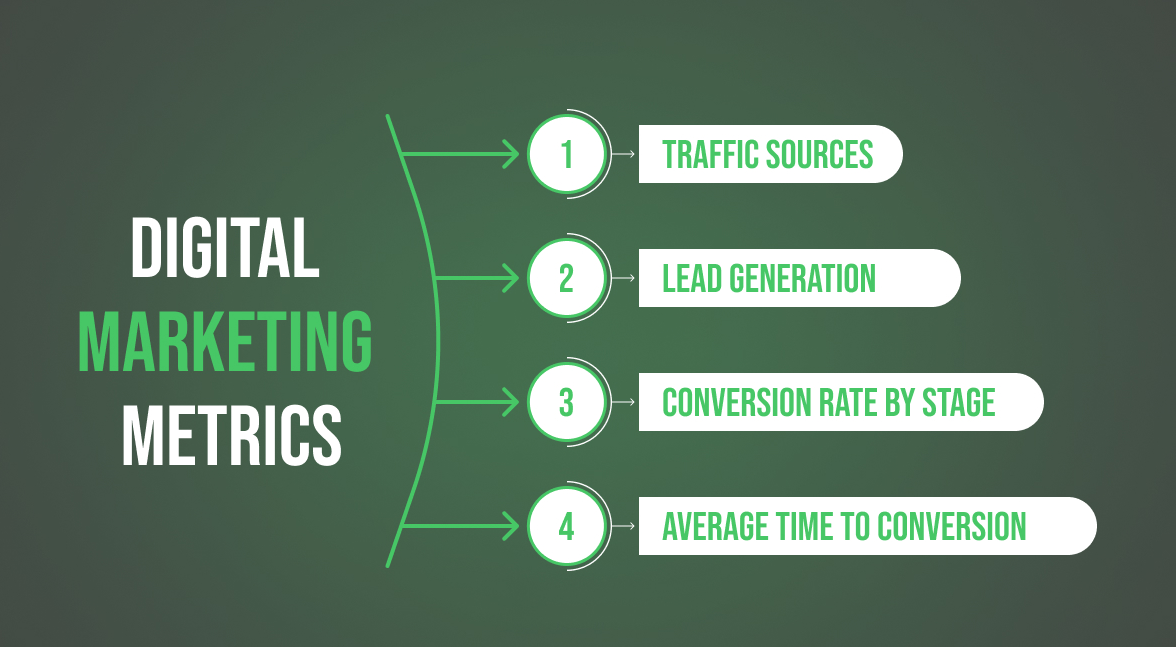
To measure success effectively, you need to track the right metrics. Here are the most important ones:
1. Website Traffic
Website traffic measures the number of visitors to your site. It is often categorized into:
- Organic traffic
- Paid traffic
- Direct traffic
- Referral traffic
Monitoring traffic helps you understand how well your marketing efforts are driving visitors.
2. Conversion Rate
Conversion rate is the percentage of visitors who complete a desired action, such as making a purchase or signing up for a newsletter.
Formula:
Conversion Rate = (Conversions / Total Visitors) × 100
A high conversion rate indicates effective marketing and user experience.
3. Cost Per Acquisition (CPA)
CPA measures how much it costs to acquire a customer.
Formula:
CPA = Total Marketing Cost / Number of Conversions
Lower CPA means more efficient campaigns.
4. Return on Investment (ROI)
ROI evaluates the profitability of your marketing efforts.
Formula:
ROI = (Revenue – Cost) / Cost × 100
This is one of the most critical metrics for measuring success.
5. Bounce Rate
Bounce rate is the percentage of visitors who leave your site without interacting.
A high bounce rate may indicate:
- Poor user experience
- Irrelevant content
- Slow loading speed
6. Click-Through Rate (CTR)
CTR measures how many people click on your ads or links.
Formula:
CTR = (Clicks / Impressions) × 100
It reflects how compelling your content or ads are.
7. Customer Lifetime Value (CLV)
CLV estimates the total revenue a customer generates over time.
Understanding CLV helps in budgeting and long-term planning.
Essential Digital Marketing Analytics Tools
To measure success effectively, you need the right tools. Here are some widely used analytics platforms:
1. Web Analytics Tools
These tools track website performance and user behavior.
- Track visitor activity
- Analyze traffic sources
- Measure conversions
2. Social Media Analytics Tools
These tools help monitor engagement, reach, and audience growth on social platforms.
3. Email Marketing Analytics Tools
They provide insights into:
- Open rates
- Click rates
- Conversion rates
4. SEO Analytics Tools
These tools track keyword rankings, backlinks, and organic traffic performance.
5. Advertising Analytics Platforms
Used to measure paid campaign performance, including impressions, clicks, and conversions.
How to Set Up Digital Marketing Analytics
Setting up analytics properly is essential for accurate data collection. Follow these steps:
Step 1: Define Your Goals
Start by identifying what you want to achieve. Common goals include:
- Increasing website traffic
- Generating leads
- Boosting sales
Step 2: Identify Key Performance Indicators (KPIs)
Choose metrics that align with your goals. For example:
- Traffic for awareness
- Conversion rate for sales
Step 3: Implement Tracking Codes
Install tracking codes on your website to collect data.
Step 4: Set Up Conversion Tracking
Define what counts as a conversion and track it accordingly.
Step 5: Create Dashboards
Use dashboards to visualize and monitor your data in real time.
Understanding Customer Journey Analytics
Customer journey analytics focuses on tracking user interactions across different touchpoints.
Key Stages of the Customer Journey:
- Awareness
- Consideration
- Decision
- Retention
By analyzing each stage, marketers can identify bottlenecks and optimize the user experience.
Attribution Models in Digital Marketing
Attribution models determine how credit is assigned to different touchpoints in a customer journey.
Common Attribution Models:
1. First-Click Attribution
Gives credit to the first interaction.
2. Last-Click Attribution
Assigns credit to the final touchpoint before conversion.
3. Linear Attribution
Distributes credit evenly across all touchpoints.
4. Time-Decay Attribution
Gives more credit to recent interactions.
Choosing the right model helps you understand which channels contribute most to conversions.
Advanced Analytics Techniques
To go beyond basic metrics, consider these advanced techniques:
1. Predictive Analytics
Uses historical data to forecast future trends.
2. Cohort Analysis
Groups users based on shared characteristics to analyze behavior over time.
3. A/B Testing
Compares two versions of a campaign to determine which performs better.
4. Funnel Analysis
Tracks user progression through different stages of the conversion funnel.
Common Challenges in Digital Marketing Analytics
Despite its benefits, digital marketing analytics comes with challenges:
1. Data Overload
Too much data can be overwhelming and difficult to interpret.
2. Data Accuracy Issues
Incorrect tracking can lead to misleading insights.
3. Integration Problems
Combining data from multiple platforms can be complex.
4. Privacy Regulations
Compliance with data protection laws is essential.
Best Practices for Measuring Success Effectively
To maximize the value of your analytics efforts, follow these best practices:
1. Focus on Relevant Metrics
Avoid vanity metrics that do not contribute to business goals.
2. Regularly Review Data
Analyze performance consistently to identify trends.
3. Use Data Visualization
Charts and dashboards make data easier to understand.
4. Align Analytics with Business Goals
Ensure your metrics support your overall objectives.
5. Continuously Optimize
Use insights to refine strategies and improve performance.
The Role of AI in Digital Marketing Analytics
Artificial intelligence is transforming digital marketing analytics by:
- Automating data analysis
- Identifying patterns quickly
- Providing actionable insights
AI-powered tools can predict customer behavior and recommend optimization strategies, making analytics more efficient and effective.
Future Trends in Digital Marketing Analytics
As technology evolves, digital marketing analytics continues to advance. Key trends include:
1. Real-Time Analytics
Instant data processing for faster decision-making.
2. Cross-Channel Integration
Unified view of customer interactions across platforms.
3. Privacy-Focused Analytics
Increased emphasis on data protection and user consent.
4. Automation
Automated reporting and optimization processes.
Conclusion
Digital marketing analytics is the backbone of successful online marketing strategies. It empowers businesses to measure performance, understand customer behavior, and make data-driven decisions.
By focusing on the right metrics, using appropriate tools, and following best practices, you can effectively measure success and continuously improve your marketing efforts.
In a competitive digital landscape, those who leverage analytics effectively will gain a significant advantage. Whether you are a beginner or an experienced marketer, mastering digital marketing analytics is essential for achieving long-term success.